
Bloqué
The French government has once again fallen, as Macron names another white, conservative man as PM and activists try to shut down the streets of France.

The disruptions kicked off in the early morning. If I had still been commuting to my old office from my old apartment, I would have first seen the protesters at the Porte de Montreuil. Here, dozens of young people mostly clad in black began dislodging the highway barriers along the peripherique ring road and dragging them into the middle of the four-lane highway as police chased after to try to clear the roads.
Then, I would have continued along the Rue de Lagny, which passes the offices of the Minister of the Interior and an RATP bus terminal. I would have bumped into the crowd of protesters in front of the bus terminal, where they attempted to prevent city buses from entering and exiting the garage. Finally, I would have made my way into Paris, almost certainly encountering some of the 80,000 police officers who were mobilized across the country, including 6,000 in Paris.
According to estimates from France’s Interior Minister, yesterday an estimated 200,000 people took to the streets across France (250,000 according to labor unions). Not quite the heights of the Gilets Jaunes in their early days, but let’s not forget that that movement didn’t really hit its apex until early December 2018 — several months after the first roundabouts were blocked.
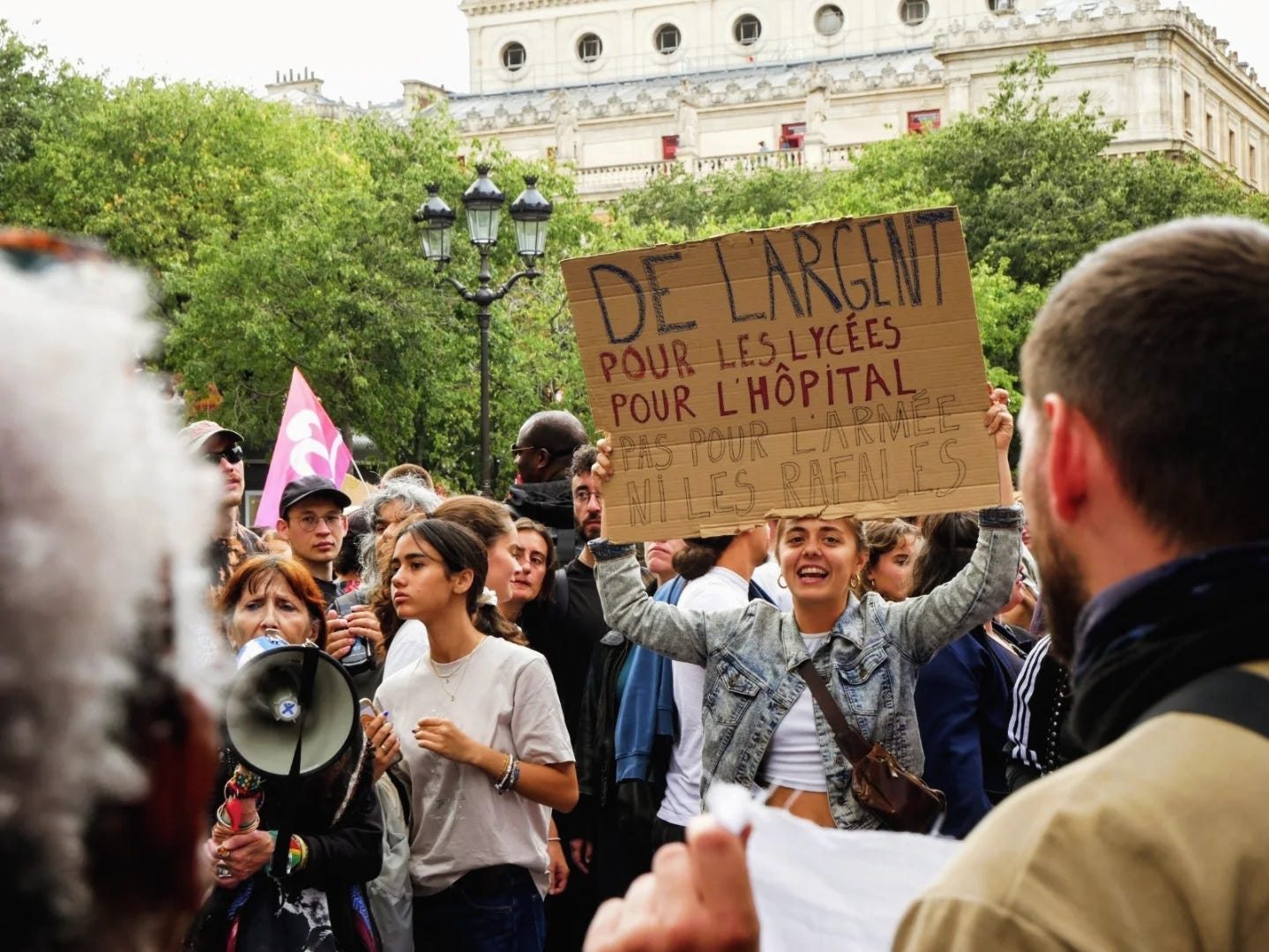
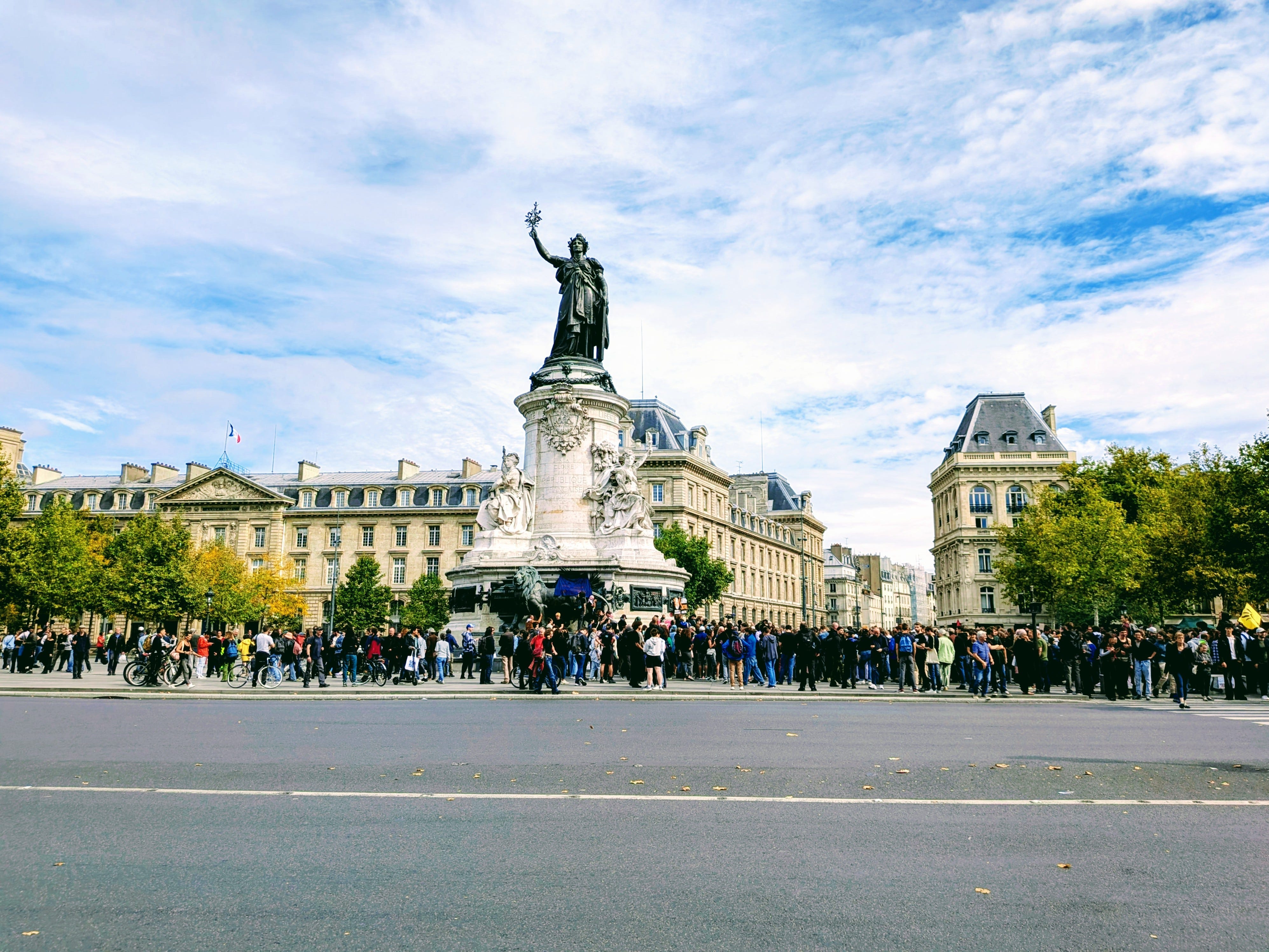
Faced with a months-long political and budgetary standoff that paradoxically pitted the left and far-right together against the center, French citizens across the country were saying that they had had enough. The ambiance in Paris was generally positive, and after lunch I made my way to the Place de Chatelet where a number of disparate groups had gathered. There were Communists, Queer groups, labor organizers and at least one brass band.


Many people I spoke to were upset about the choice of the latest French PM. As much as the French government wants to make the crisis a budget issue, it is really a political one. Over the past three years, France has had five different PMs. The most recent one, named last night, Sebastian Lecornu, is a Macron party loyalist who — like several of his predecessors — hails from the traditional right. He is pro-hunting, anti-marriage equality and has spent the past two years OKing shipments of weapons parts to Israel as the Army Minister.
Nicholas, an artist (top left), had joined the protest with a hand-made sign depicting Macron and Lecornu wearing suits and ties and standing in front of billowing flames that look quite similar to the logo of the far-right National Rally. “There’s a genocide going on. The election results are not being respected. There’s nothing democratic about what’s going on,” he told me.
Others carried signs rebuking Macron’s neoliberal policies, which included as his first act in office the removal of a tax on France’s highest earners. One read: “The only trickle down is in my toilet.” Another, simply: “Parasites.”
France IS in a budget crisis, but the timing of the debt explosion — which tracks with Macron’s pro-business and anti-union politics — makes you wonder just exactly how we got here.
Really appreciate this on-the-ground perspective. What strikes me is how cyclical French politics feels: the anger at elite continuity, the fusion of left and far-right outrage, the symbolic street actions. It makes me wonder if Macron is betting that fatigue will dull dissent, but as you note, movements like the Gilets Jaunes only reached full force after months of escalation.
There’s something telling, too, about the imagery — flames behind suits, trickle-down as toilet water — that suggests people aren’t just rejecting one PM, but a whole system that pretends crisis is fiscal when it’s really about democracy itself.